 Syncgate
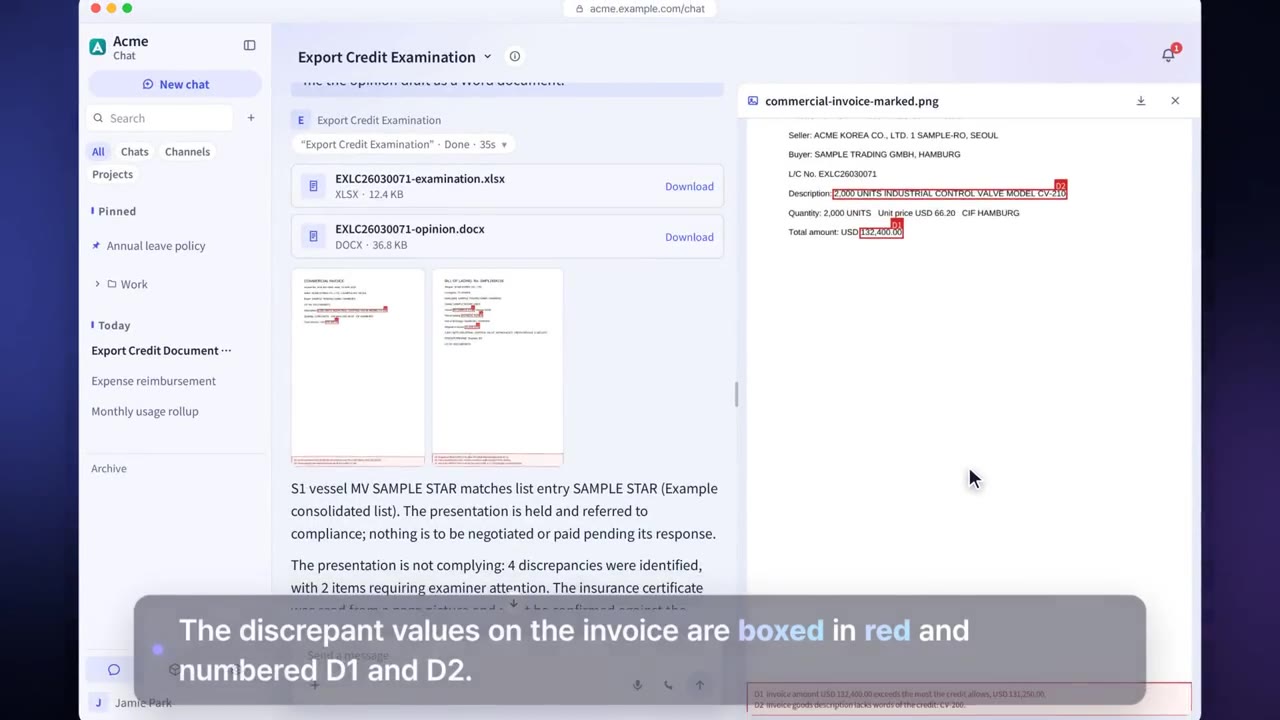
Ask about business data in natural language
and get tables and charts back
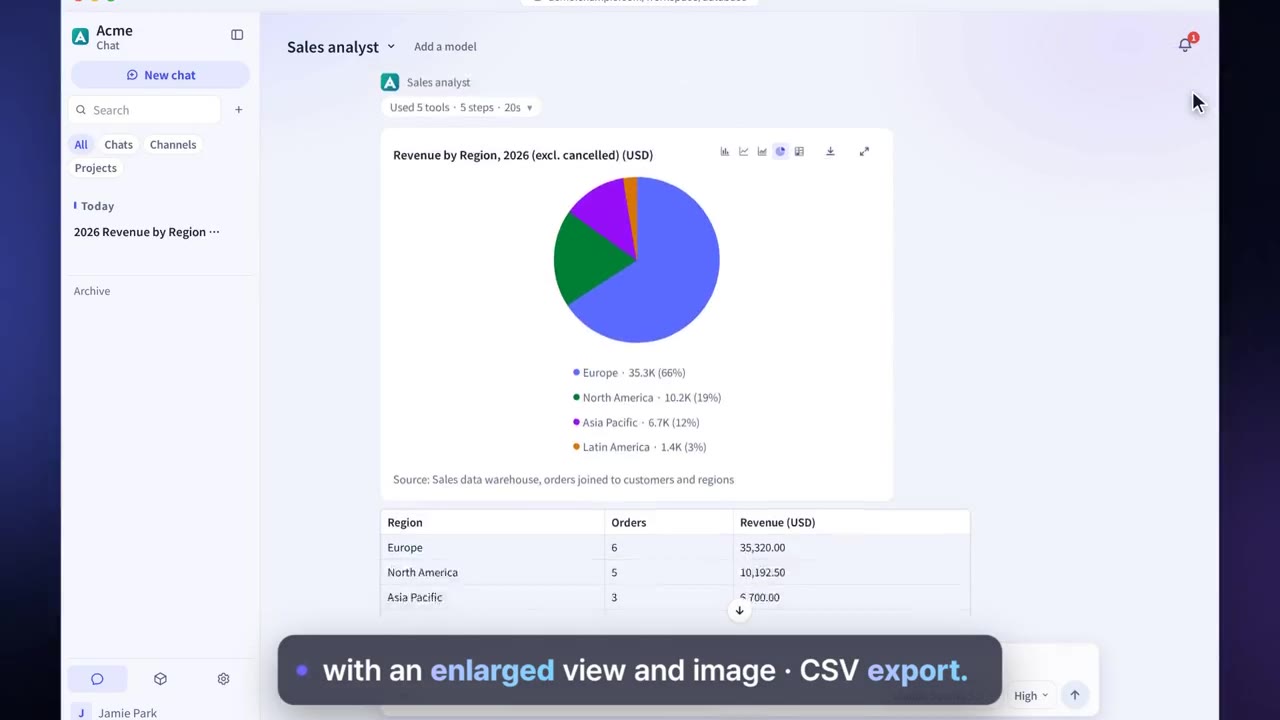
Connect any of 10 databases, including PostgreSQL, Oracle, SQL Server, Snowflake and BigQuery. Ask in natural language, get the answer as a chart, and verify it with the SQL that ran. Queries that succeed are reused for later questions.
Ask documents and data
in natural language
Use policy documents as knowledge bases and business data through database connections. Agents draw on both to answer.
Knowledge bases and grounded answers
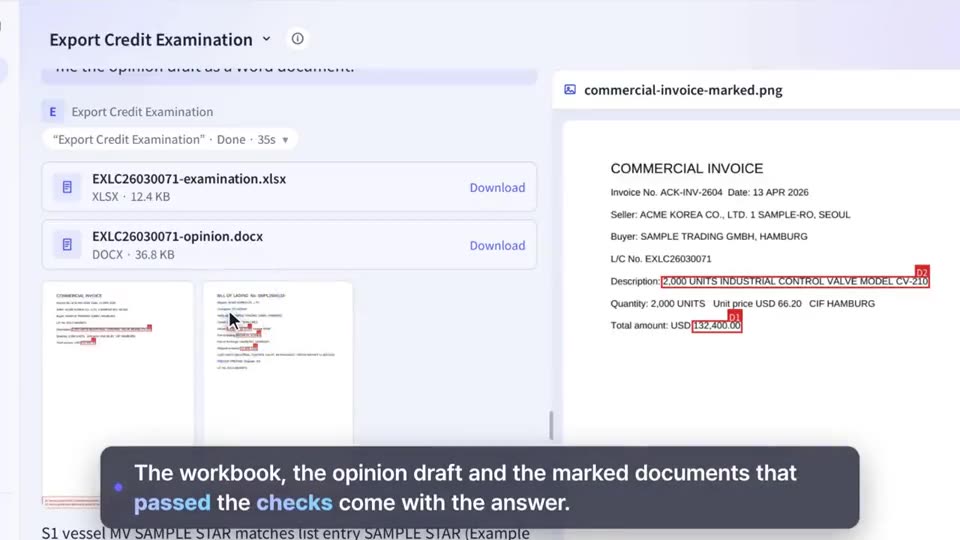
PDF and DOCX files are indexed on upload, and a search test lets you check the retrieved chunks first. Every sentence of an answer carries a source number.
Natural-language database queries
Connect 10 databases including PostgreSQL, Oracle, Snowflake and BigQuery. Ask in natural language, get a chart, and verify with the executed SQL.
Before and after adoption
Even a simple aggregate means asking the data team and waiting.
Business users ask directly and get the results together with the SQL that ran.
It is hard to trust that SQL written by AI is correct.
The SQL that ran is shown with the answer, and the system learns from successful queries and uses them in later answers.
Columns that hold personal data can end up in answers.
Column policies mask those values or leave them out.
Four steps
Choose the database type, enter the connection details and check that the connection works.
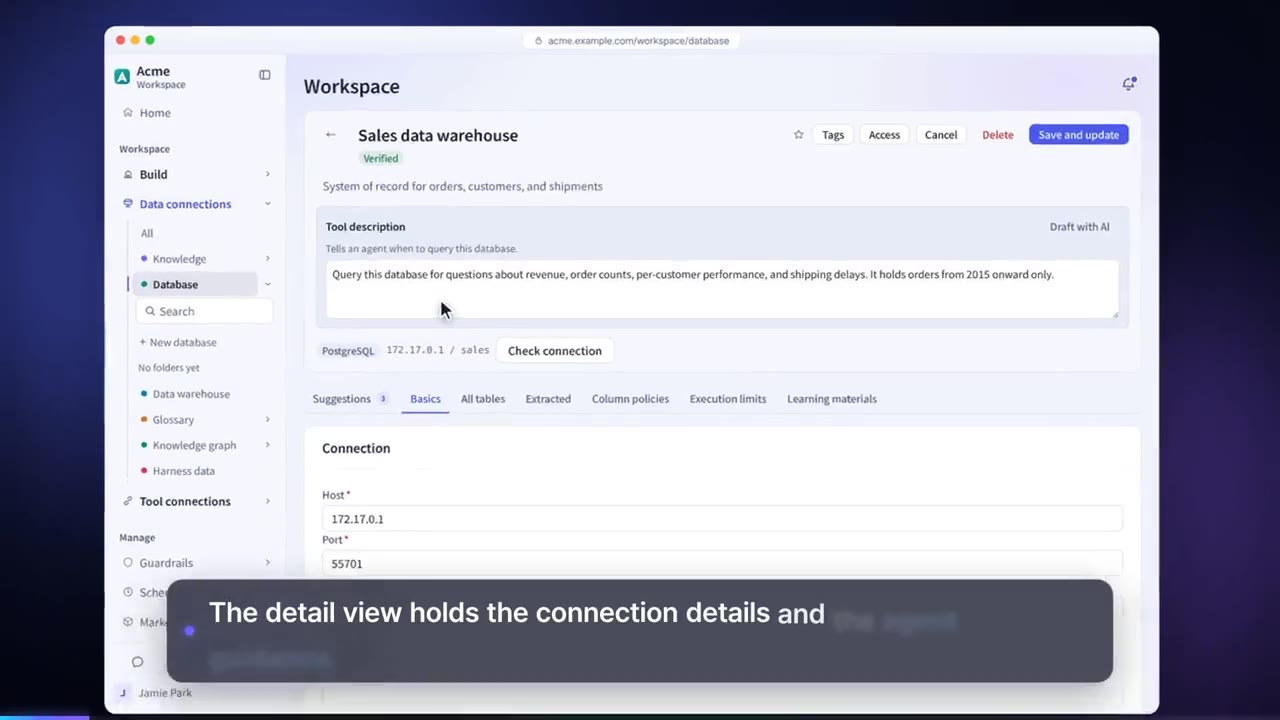
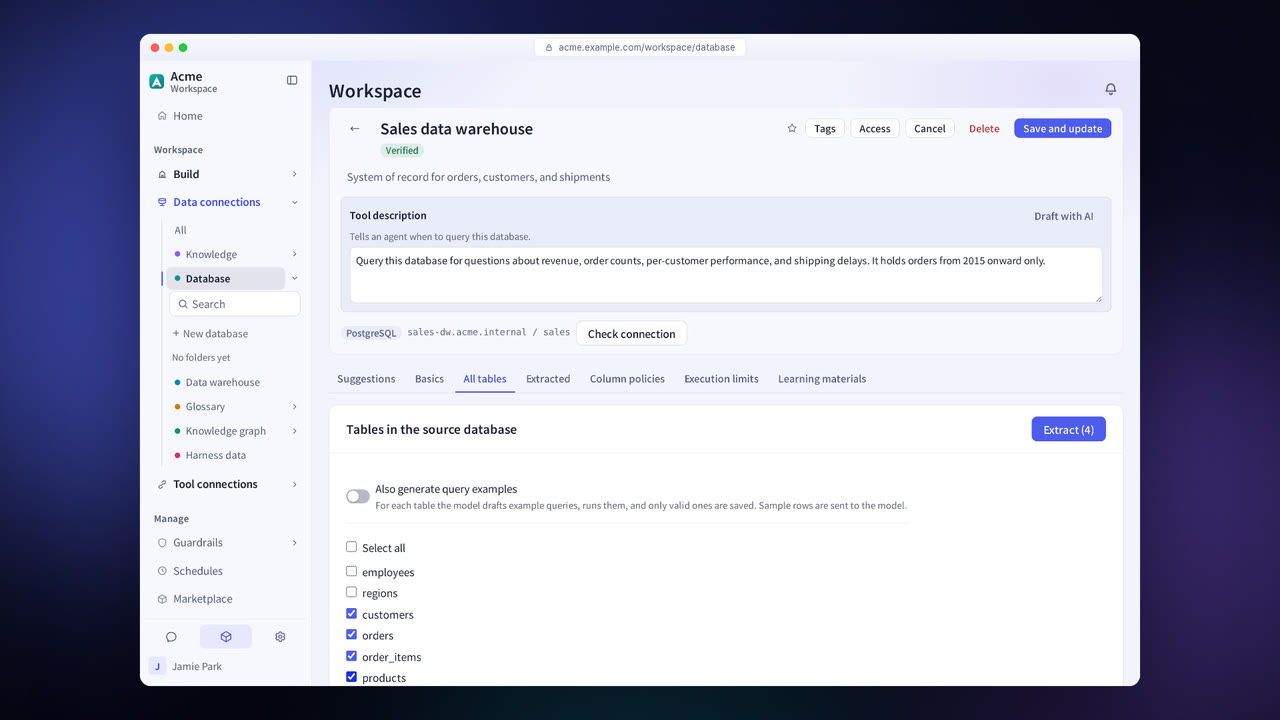
Choose the tables and columns that queries can use, and apply column policies to personal data columns.
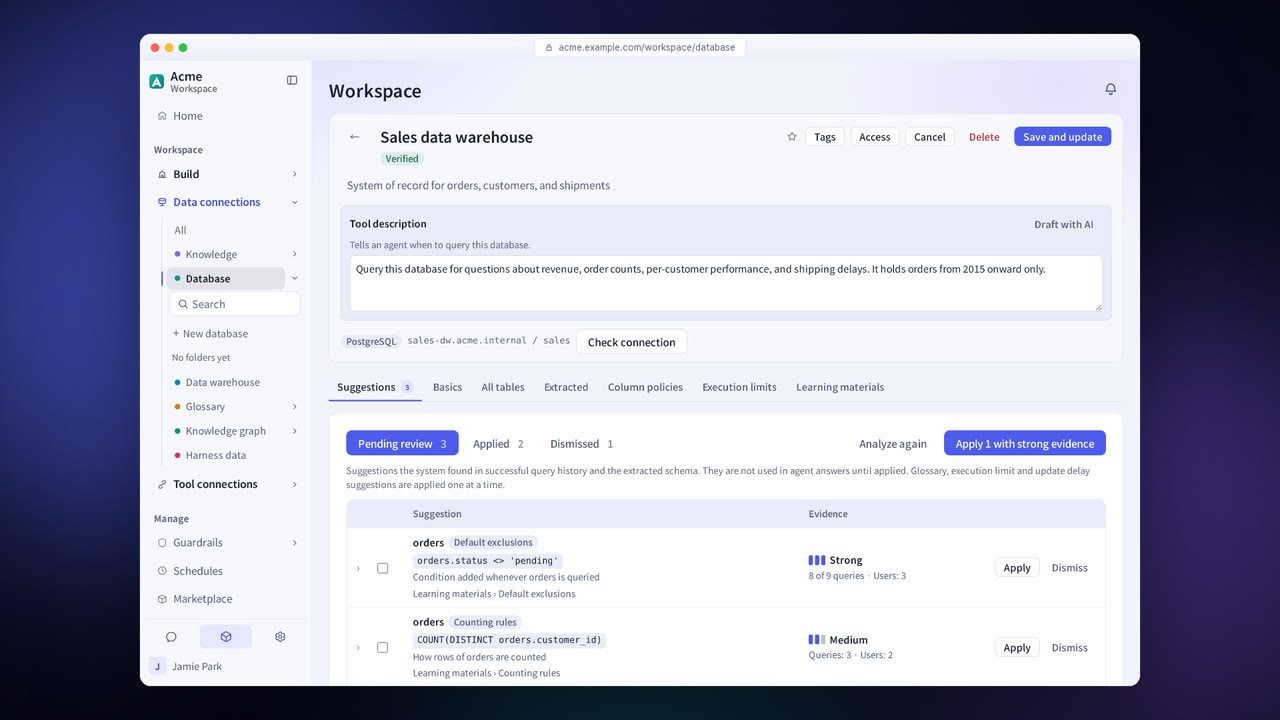
Review the default exclusions, counting rules, joins and execution limits that the system finds and suggests, and apply them one at a time.
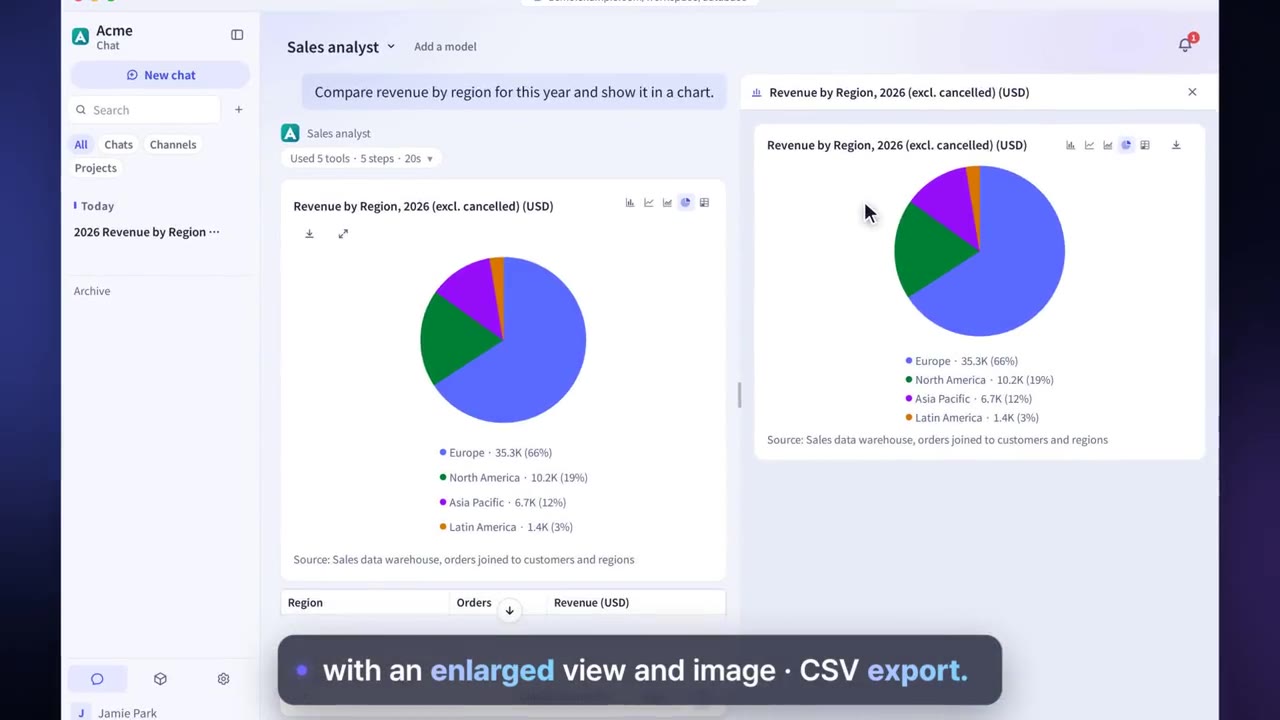
Ask in chat and get tables, charts and the SQL that ran.
Database queries in detail
10 databases
Connects PostgreSQL, MySQL, MariaDB, SQL Server, Oracle, Synapse, Fabric, Snowflake, Databricks and BigQuery.
SQL and charts
Shows the SQL that ran and a chart alongside the answer.
Learning from successful queries
Remembers successful queries and reuses them for similar questions.
Suggestions
Finds and suggests default exclusions, counting rules, joins and execution limits.
Execution limits
Sets execution limits for each connection type.
Column policies
Mark a column as personal data, and its values are masked or excluded in every query.
Settings each company configures
- Set up the connection and the tables that queries can use.
- Apply column policies to personal data columns.
- Review execution limits and suggestions.
Figures reflect the product as of October 2026.
Frequently asked questions about database queries
Does it also run queries that change data?
Queries are for reading data, and execution limits are set for each connection type. You can see the limits in effect on the Execution limits tab.
What if column names are English abbreviations the AI does not understand?
Write down the column's meaning and synonyms in a glossary, and that meaning is passed to the model before it answers.
Which databases can we connect?
You can connect 10 databases: PostgreSQL, MySQL, MariaDB, SQL Server, Oracle, Synapse, Fabric, Snowflake, Databricks and BigQuery.
See it with
your own documents
In a consultation, we connect a few of your documents so you can check the answer quality for yourself. Send us your questions and our team will get back to you.